Implant Bridges
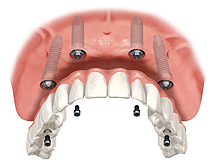
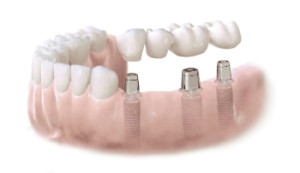
An implant bridge is a row of replacement teeth which uses two (or more) dental implants as anchors. Implant bridges use strategically placed dental implants to hold a row of replacement teeth in place. Once the dental implants are placed, abutments are attached that will connect the bridge to the implant.
Because implant bridges require fewer implants than placing one implant for each missing tooth, this procedure can be less invasive than replacing every tooth individually.
Multiple Individual Implants
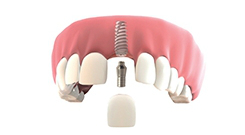
Implants can also support individual crowns where several teeth are missing but not in a single row. Each implant is a standalone restoration. They are easier to clean than a conventional bridge, and should need less treatment in the future.
The Process
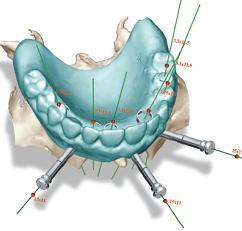
Consultation and planning — a full oral examination and imaging (X-rays or 3D scan) to assess bone, gum, and overall oral health, and to plan the number and type of implants.
Implant placement — under local anaesthesia (and sedation if preferred), titanium implant posts are inserted into the jawbone.
Healing and osseointegration — over the next few months, the bone bonds with the implants, creating a stable foundation. Healing times vary depending on bone quality and overall health.
Abutment and restoration — once integrated, abutments are attached, then a custom-made crown or bridge that matches the natural teeth in shape, shade, and function.
Aftercare
No special maintenance is needed beyond the care you would give natural teeth: brush twice daily, floss regularly, and attend routine check-ups. Smoking can reduce implant success, and should be avoided.